Stockroom
The e-commerce operations command center — products, orders, inventory, and checkout in one fast workspace.
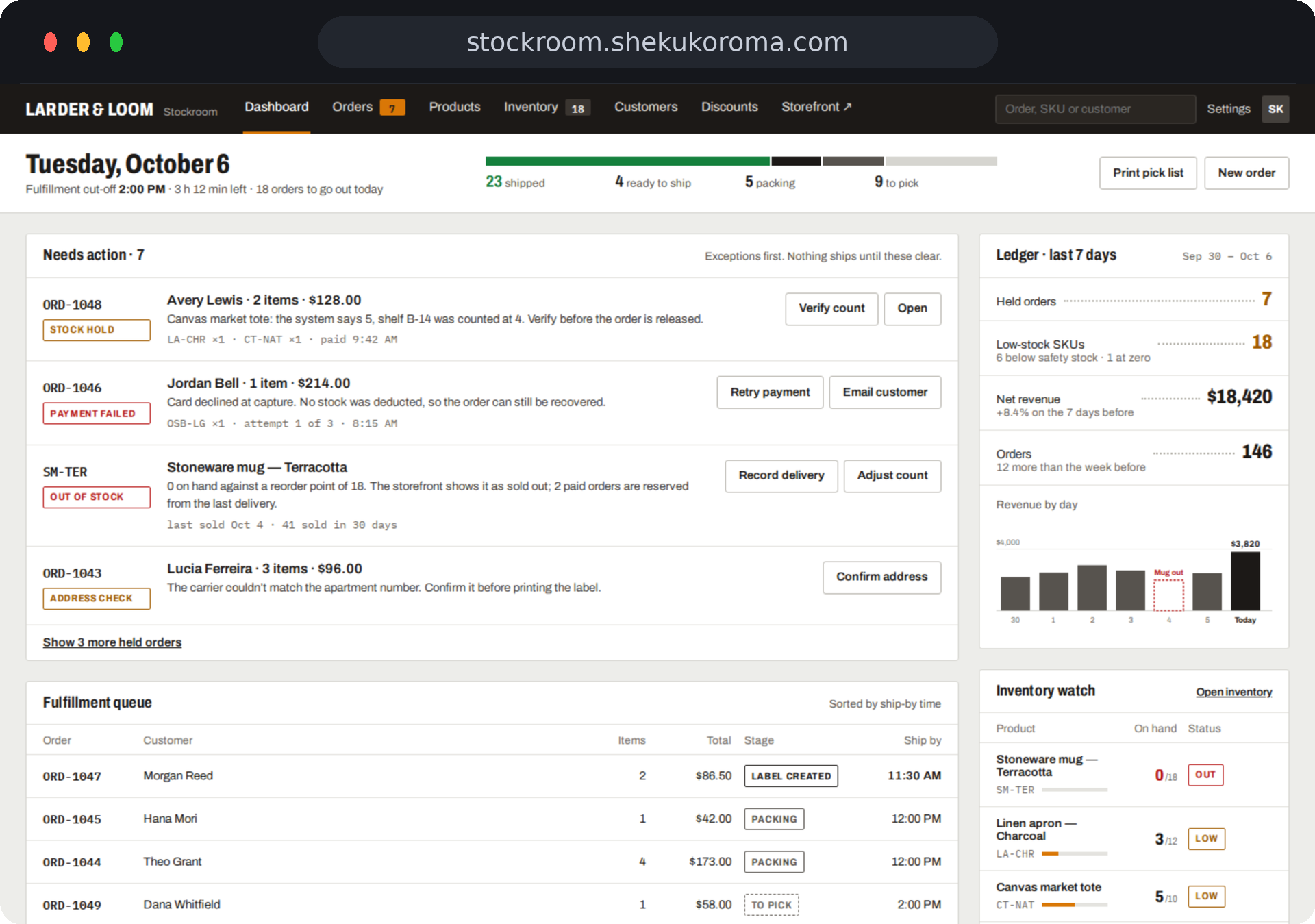
The interface, up close.
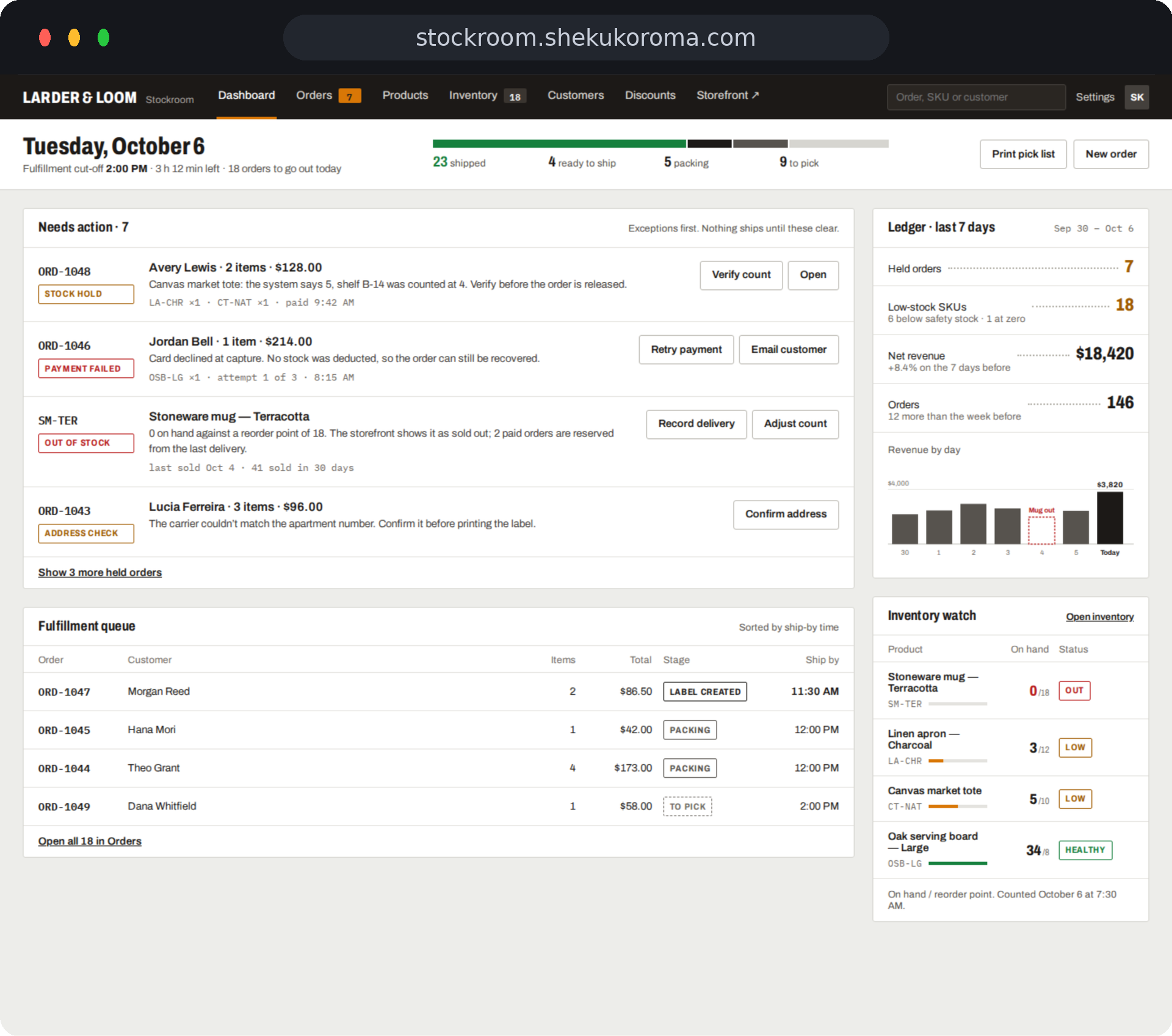
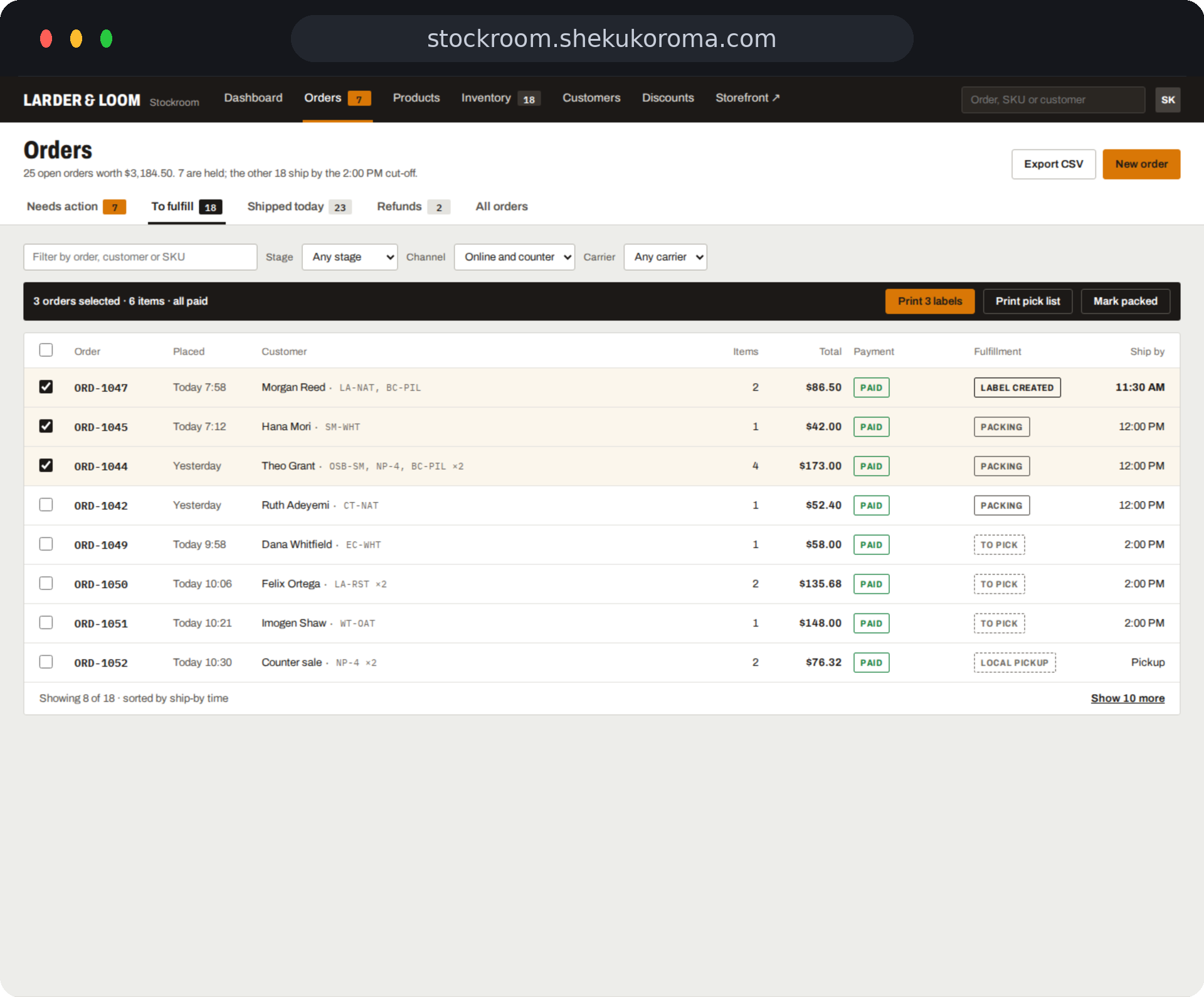
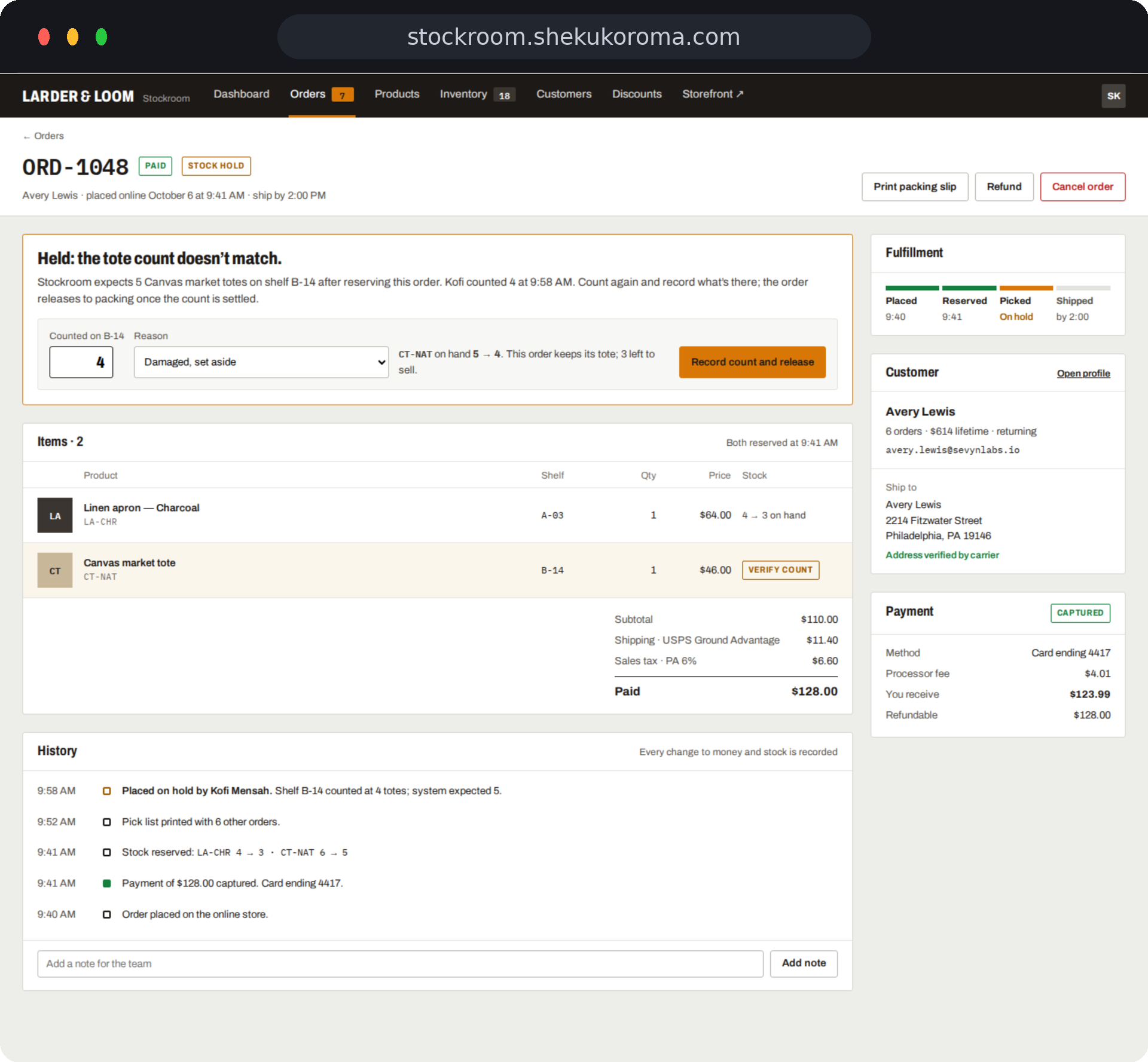
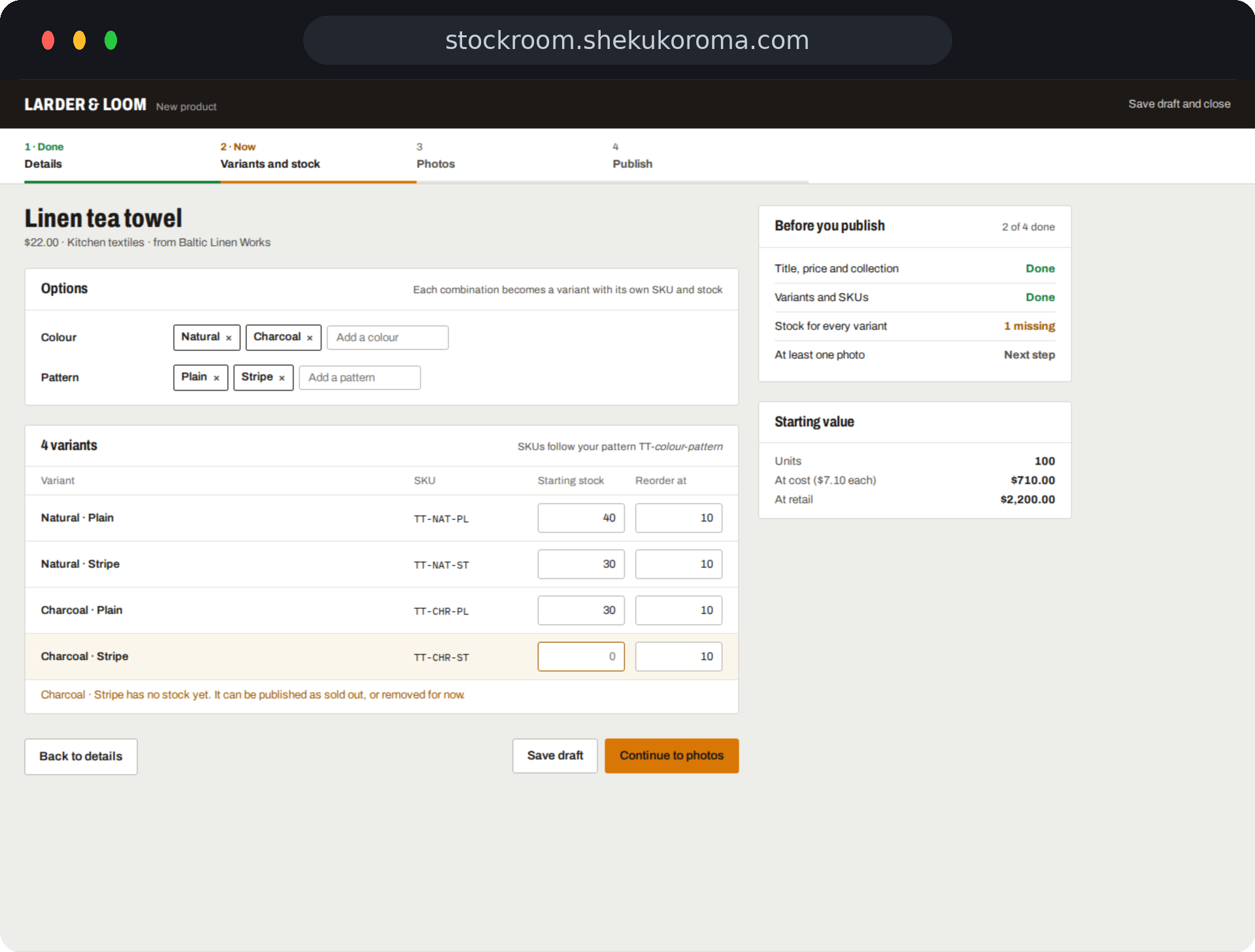
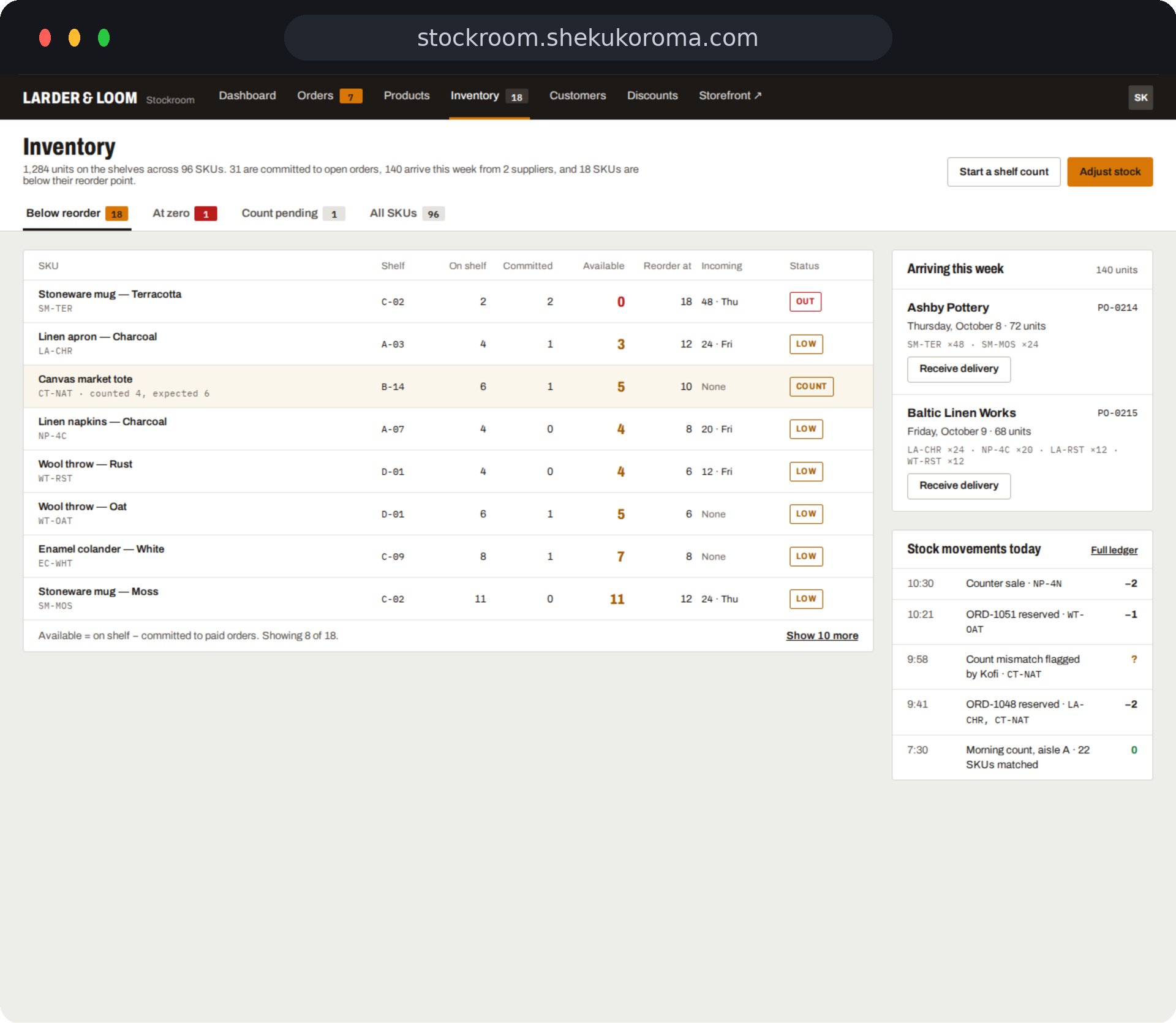
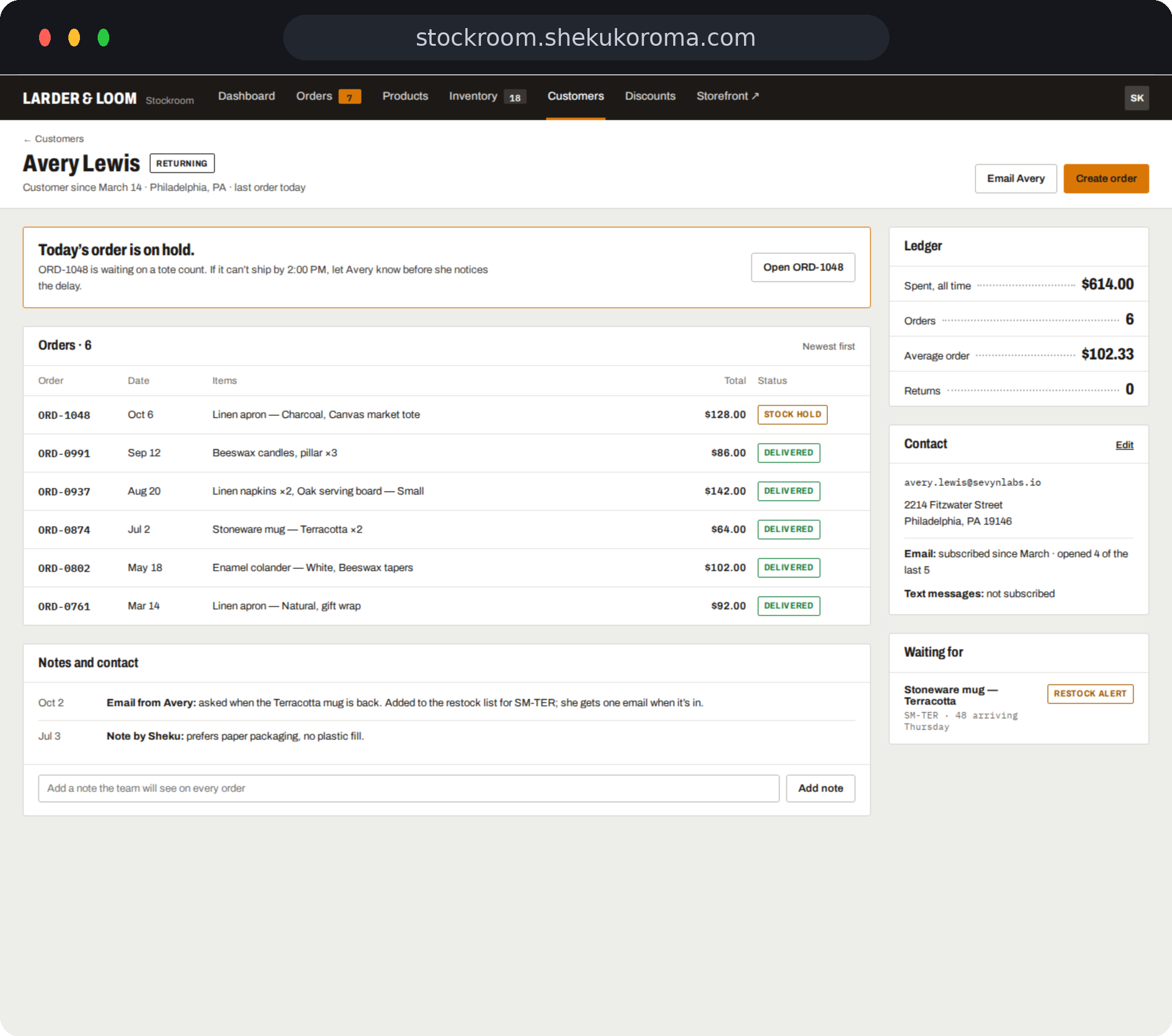
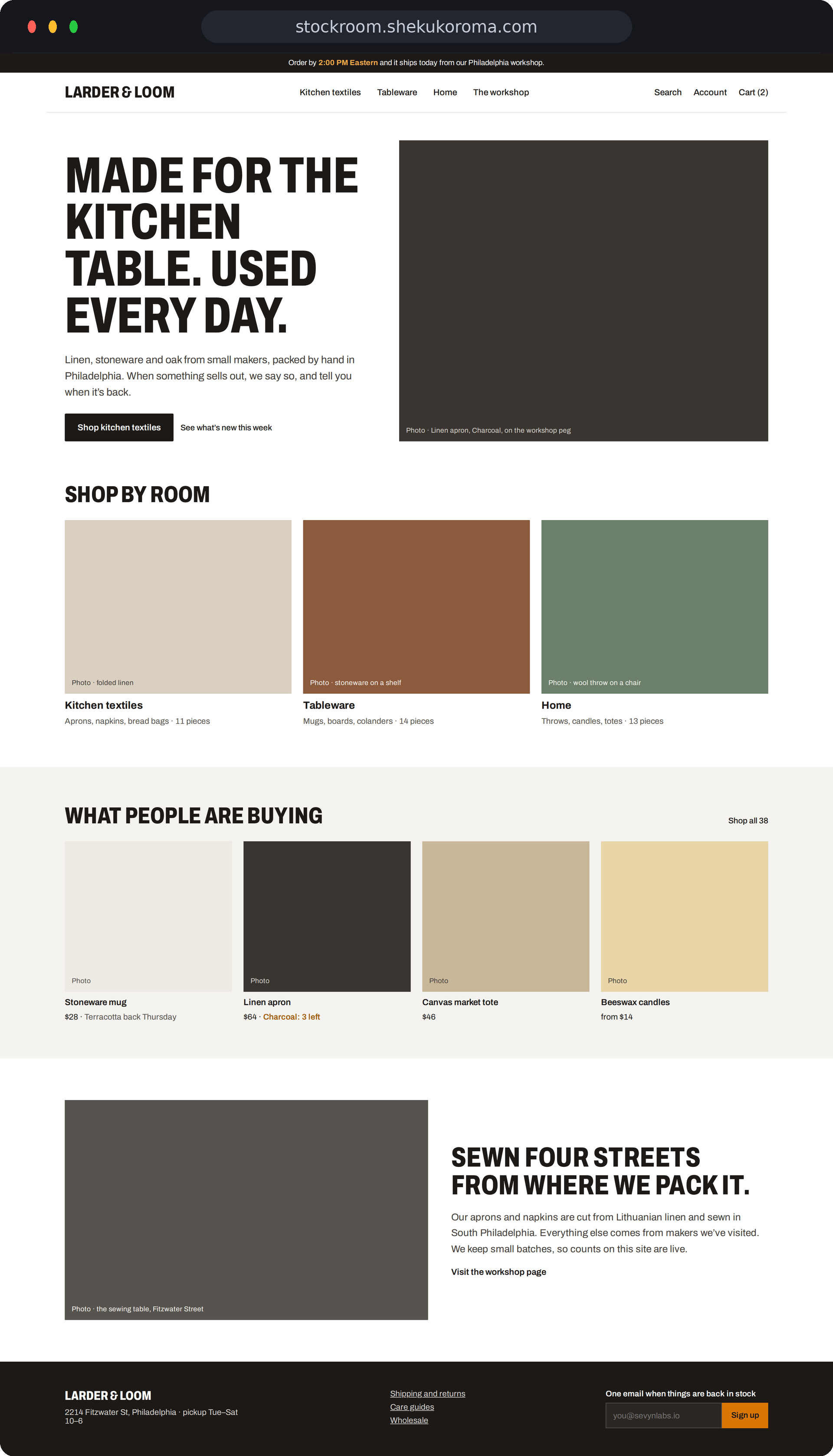
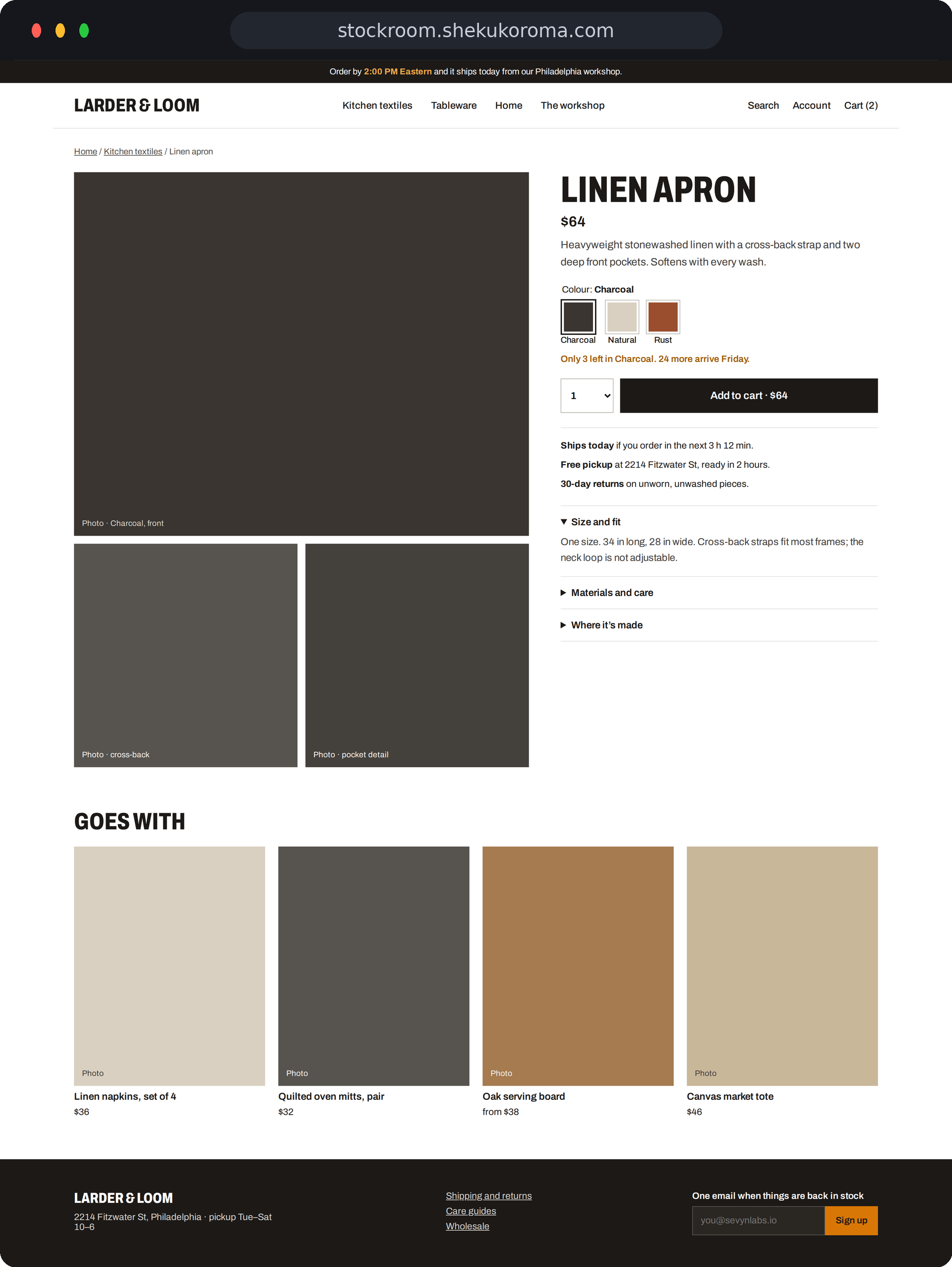
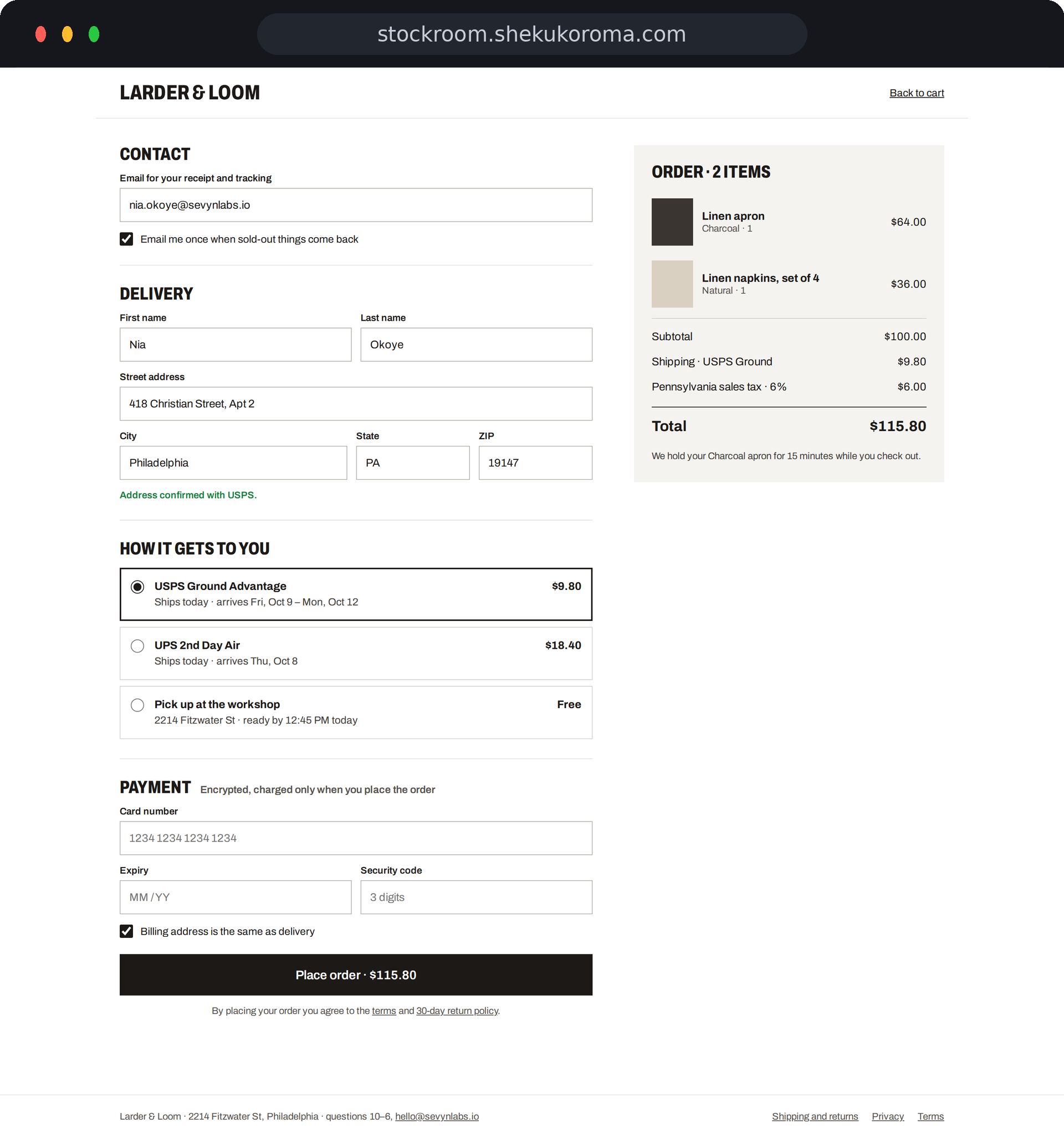
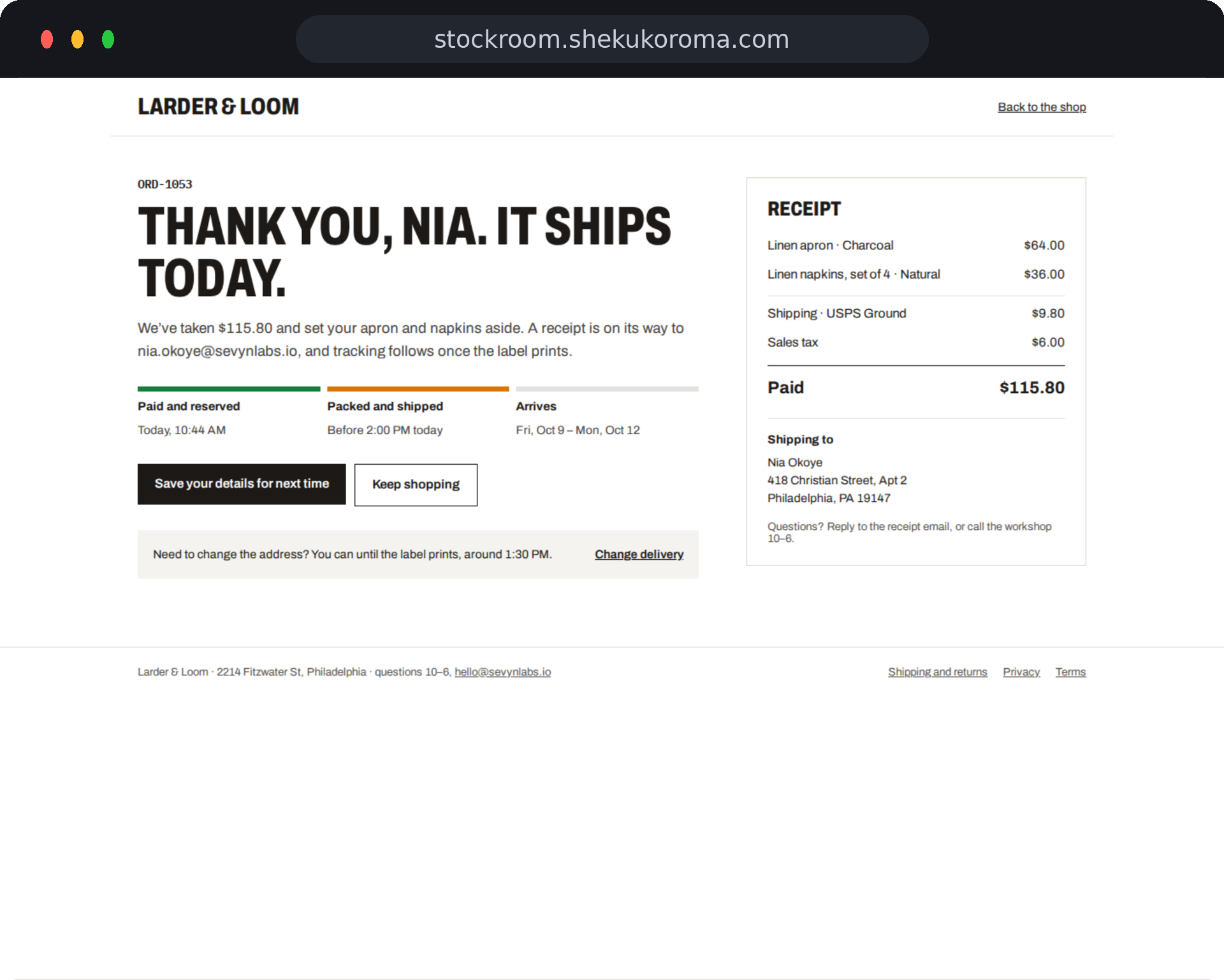
The back office and the storefront, finally in one place.
Stockroom is the operations workspace for small online stores — the place a shop’s whole day runs from. The catalog, the orders, the inventory, and the checkout all live in one fast workspace, so the person packing boxes and the person answering customers are always looking at the same truth.
Staff build products through a guided four-step wizard — details, variants, media, pricing — and fulfill orders from a queue that keeps every order’s state explicit. Inventory is transactional: every sale, refund, and adjustment moves stock through a single audited path, so a count can never quietly go negative or drift from reality. Out front, customers shop a public storefront with live stock hints, variant pickers, and discount codes validated at the cart — then pay through a Stripe checkout whose totals are recomputed on the server and confirmed by verified webhooks, never trusted from the browser.
Stockroom is built for owner-operators and small teams who have outgrown spreadsheets and marketplace dashboards but don’t need enterprise software: serious operational bones — an operations ledger, low-stock inventory watch, revenue trends, printable packing slips — in an interface a new hire can learn in an afternoon.
- Product wizard — four-step builder with variant matrix, media, and a tabbed editor
- Transactional inventory — every stock movement through one audited path; counts can’t go negative
- Fulfillment queue — orders picked, packed, and shipped, with packing slips
- Stripe checkout — server-recomputed totals, HMAC-verified webhooks, idempotent event handling
- Live storefront — variant picker, stock hints, and cart-level discount validation
- Revenue & inventory watch — trends and low-stock signals, no spreadsheet export required
Engineered like a product, not a demo.
108/108
tests passing across 13 files — webhooks, race conditions, declined cards, RLS isolation. Every QA gate green.